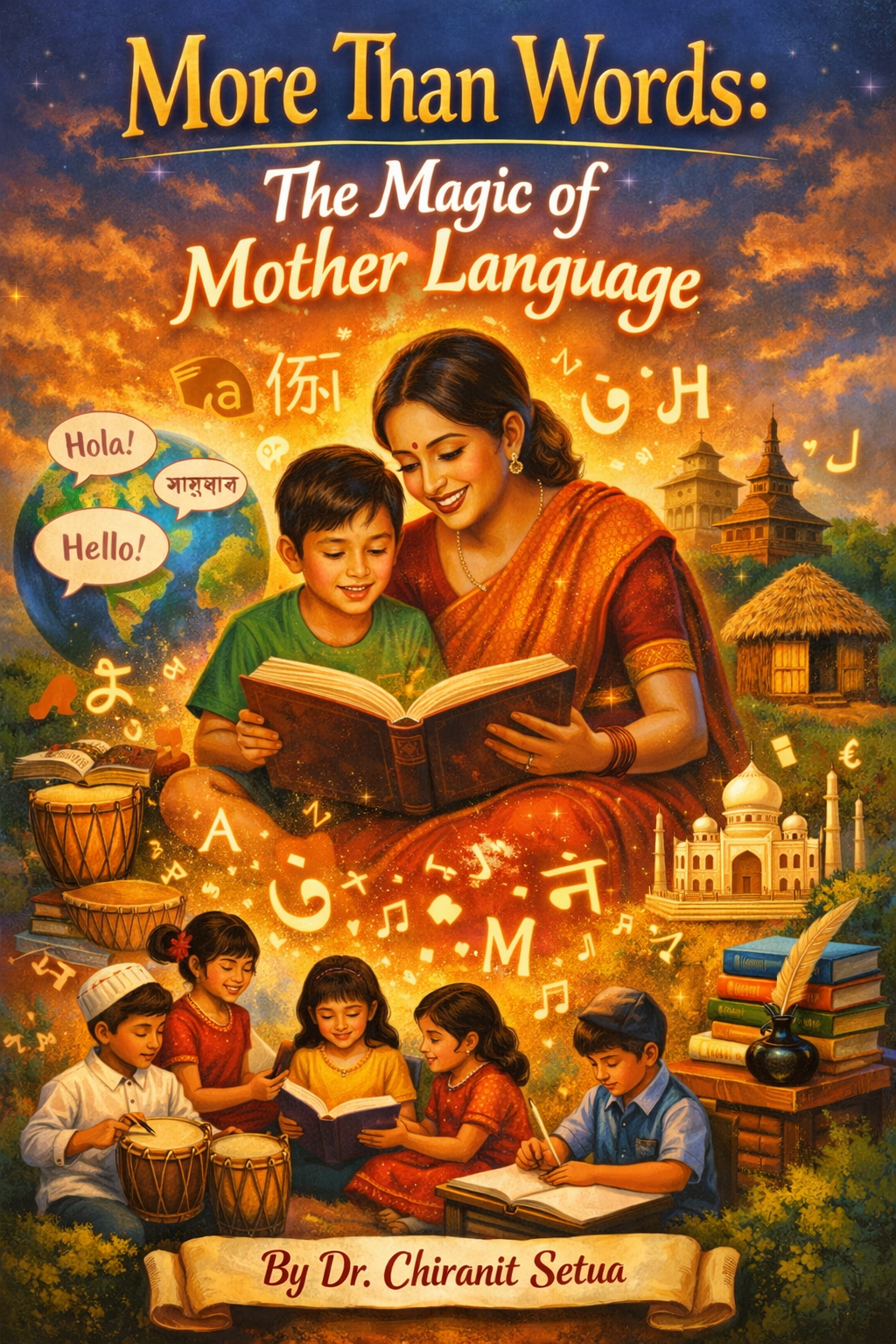
More Than Words: The Magic of Mother Language
This four-week course, More Than Words: The Magic of Mother Language, is designed for B.Ed student-teachers to explore the educational, cultural, and psychological significance of the mother tongue in the teaching-learning process. The course emphasizes how a learner’s first language plays a vital role in cognitive development, emotional expression, identity formation, and meaningful classroom participation. It aims to help future teachers understand the strong connection between language, culture, and learning outcomes.
The course begins by introducing the concept of mother tongue and its role in children’s language acquisition and overall development. Student-teachers examine how learning in one’s home language enhances comprehension, confidence, and critical thinking. The second phase focuses on the role of mother tongue in education systems, highlighting multilingual realities in classrooms and reviewing educational policies that promote mother-tongue–based instruction.
In the third week, the course shifts toward practical pedagogy. Student-teachers learn inclusive teaching strategies suitable for linguistically diverse classrooms, including bilingual approaches, translanguaging practices, and activity-based learning methods. Emphasis is placed on creating supportive learning environments where students’ linguistic backgrounds are respected and used as learning resources rather than barriers.
The final week concentrates on developing teaching-learning materials and assessment practices that incorporate local languages and cultural contexts. Participants engage in lesson planning, storytelling activities, and reflective practices that encourage the integration of mother language into everyday teaching. The course also promotes the use of local stories, community knowledge, and culturally relevant examples to make learning more meaningful and accessible.
Overall, this course prepares future educators to become culturally responsive and inclusive teachers who recognize the value of linguistic diversity. By the end of the programme, student-teachers gain both theoretical understanding and practical skills to effectively use mother tongue as a powerful tool for enhancing learning, promoting equity, and preserving cultural heritage within educational settings.
- Teacher: Admin User